
One approved listing. Every output checked.
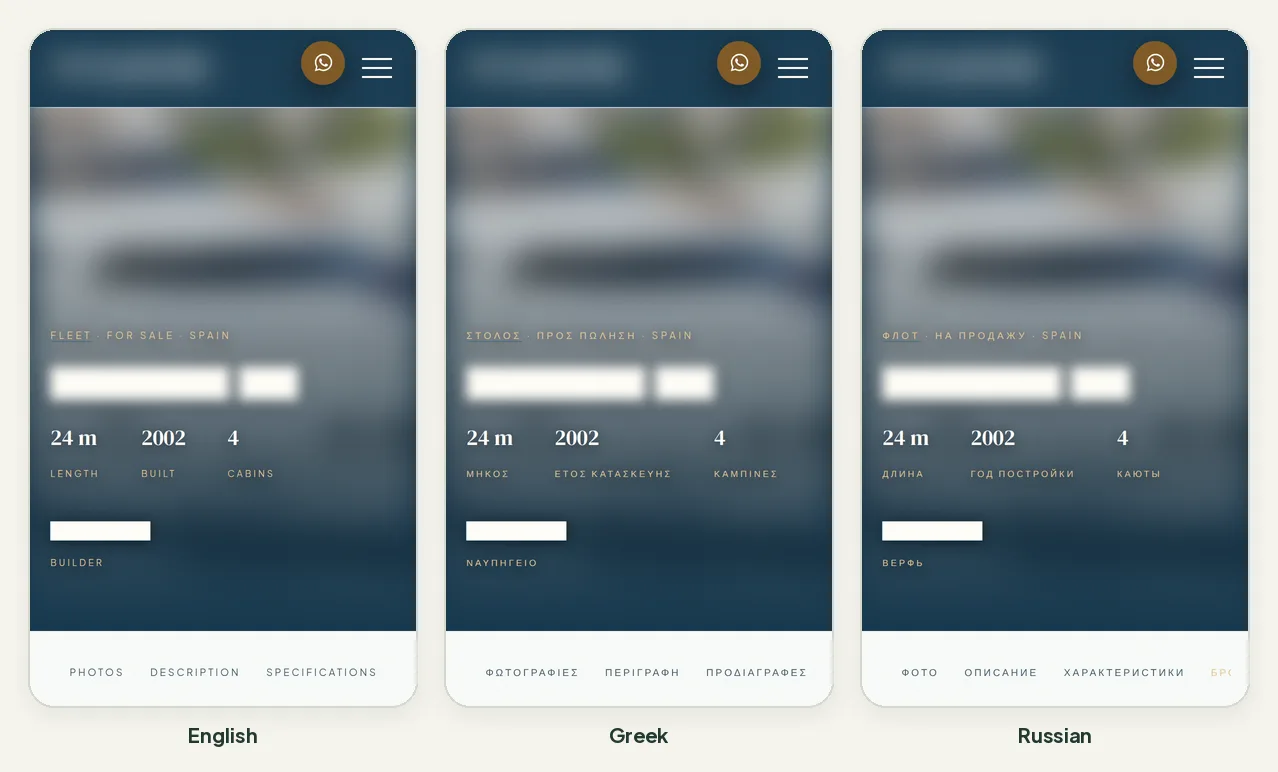
A yacht listing turns into pages in three languages, a set of chosen photographs and two kinds of brochure. The hard part is keeping every one of them faithful to what the broker approved.
- Client
- A boutique yacht brokerage in the East Mediterranean
- Status
- Live, public website and broker portal
- Languages
- English, Greek and Russian
- My role
- Website, broker portal, images and brochures
- Specifications and price
- English description
- Chosen photographs
- Status: published
Stays private Drafts, internal reference photos, old watermarked images
Illustration of how the system works. The client's name and content are kept private.
Yachts and pages: live sitemap, 24 September 2026. Brochures: the site's build setup, one of each per listing.
“I don't know very much about technology, but I can certainly see the excellent result, and the care you've put into helping [the business] grow.”
Where the real work sits.
Building a website is quick now. Keeping hundreds of generated pages, images and PDFs correct, week after week, is where a broker's reputation is won or lost.
The right version reaches the public.
The broker can edit a new draft while the previous version stays live. The portal shows clearly which is which, the website reads only published content, and draft brochures are marked as drafts.
"Saved", "approved" and "on the website" never mean the same thing.
Each output has its own rules.
A branded brochure for clients and an unbranded copy for other brokers are built separately. Internal reference photos are kept off the public site, and photos marked as already carrying an old watermark are never stamped a second time.
Automation knows its limits.
The English text feeds the Greek and Russian pages. When the English changes, AI refreshes the translations it manages and leaves hand-written ones alone.
AI can prepare the content. The rules decide which text it is allowed to touch.
Automatic checks, then my own eyes.
Before each release, the generated pages, images and brochures are checked automatically. Then I look at the result myself, because text can be present but cut off, a photo can be valid but badly framed, and a build can succeed with the wrong version inside.
One source of truth, many documents that must match it.
Price lists, proposals, product sheets, translated contracts. Most companies have this problem somewhere, and it's exactly the kind of work AI handles well when the rules are clear.
Tell me one task your team hates doing.
In a free 15-minute call, we'll work out whether AI can take it on and what a sensible first step would be. If the answer is no, I'll say so.
Free · 15 minutes · you'll talk to me, not a sales team.